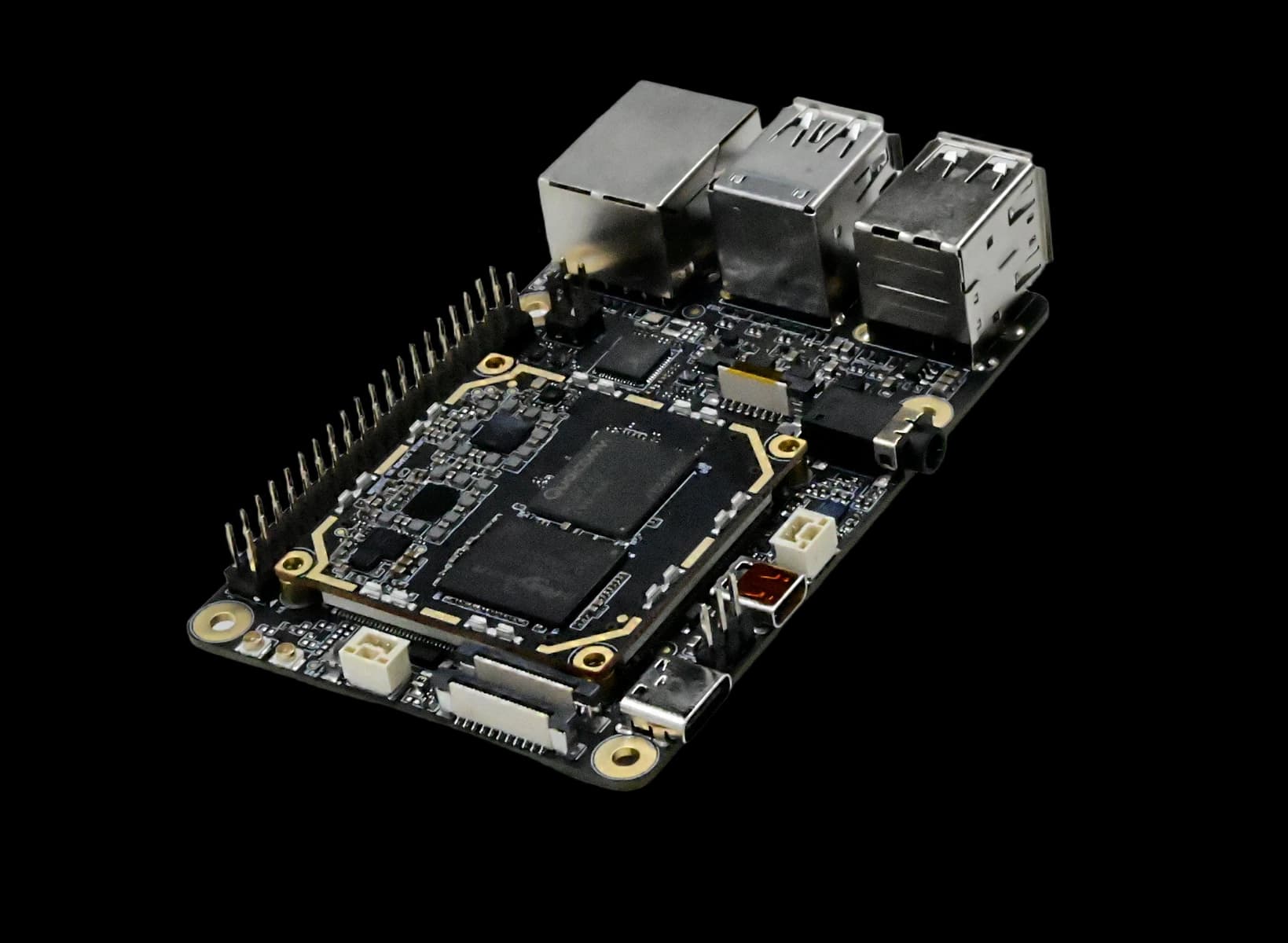
Compact 85 × 56 mm board
The Q64 module and compact carrier board support mechanical and system integration in space-constrained devices.

Compact edge AI development board
Bring edge AI into compact devices
Built on Qualcomm Dragonwing QCS6490 and the Rhino Core Q64 module, with 8GB LPDDR5 and 64GB eMMC. Connect dual cameras, displays, networks and control peripherals on an 85 × 56 mm board for vision recognition, touch interaction and robot perception development.
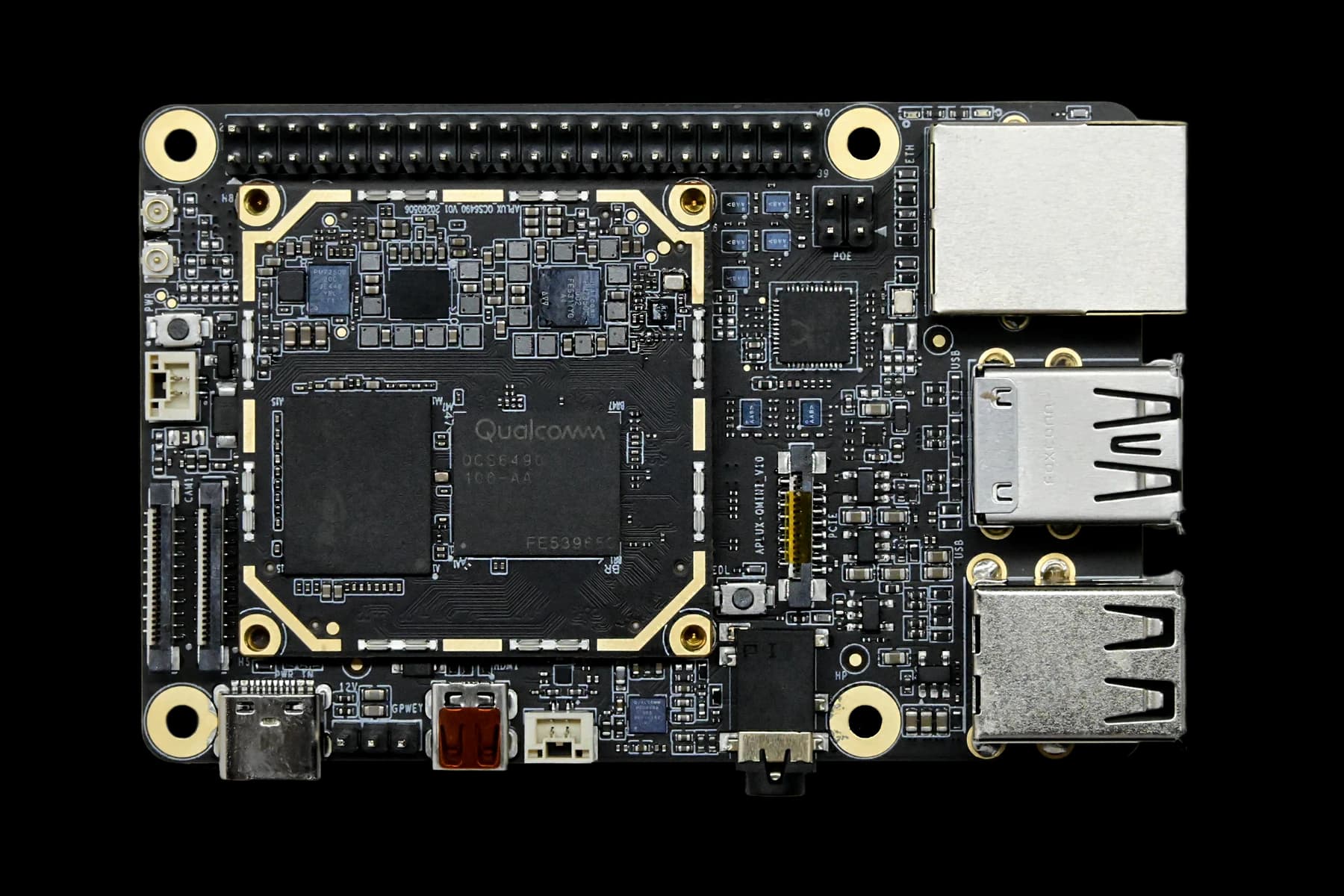
85 × 56 mm
Reference PCB outline
12 TOPS
Maximum dense AI performance
8GB + 64GB
LPDDR5 + eMMC 5.1
Dual 4-lane
MIPI CSI camera interfaces
Dimensions refer to the PCB outline. Allow space for connectors, the compute module and heatsink. AI performance is the platform's nominal rating.
Local compute, image capture, displays and peripheral connections on one board for compact device development.
The Q64 module and compact carrier board support mechanical and system integration in space-constrained devices.
An octa-core QCS6490 CPU, Adreno 643 GPU and up to 12 TOPS of dense AI compute provide a hardware foundation for object detection, image classification and other edge applications.
Dual 4-lane MIPI CSI, Micro HDMI, MIPI DSI and an I²C touch interface connect image capture with device displays.
Gigabit Ethernet, Wi-Fi 6, Bluetooth 5.4, four USB-A ports and a 40-pin header support networking, peripheral connections and bus debugging.
Front and back interfaces cover image capture, touch displays, networking and control expansion for prototype debugging and device integration.
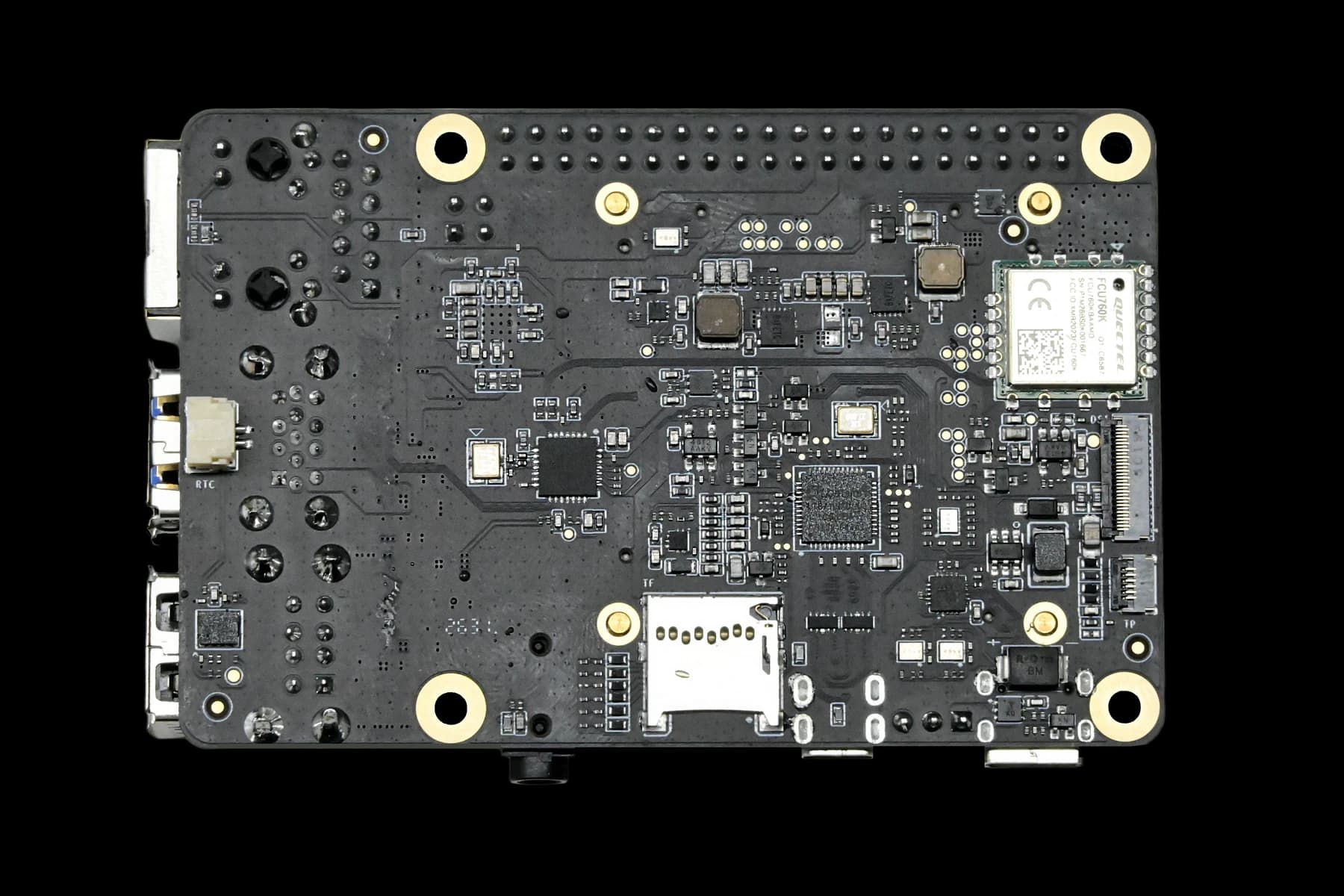
Select a number to explore an interface. Refer to the physical board and product specification for exact positions.
Two 4-lane MIPI CSI interfaces with 22-pin FPC connectors for compatible cameras.
PoE requires a compatible HAT, sold separately; RTC requires an external backup battery. USB-C and J12 are alternative 12 V inputs and must not be used simultaneously.
Connect cameras to develop object detection, image classification, counting and status analysis applications.
Connect displays and touch interfaces to build self-service devices, interactive panels and compact human-machine interfaces.
Connect cameras, audio and sensors to develop visual perception and interaction applications.
Combine display outputs and network connections to develop content playback and remotely managed terminals.
Also suitable for maker education and compact AI device prototyping.
These specifications describe the complete development board with the Rhino Core Q64 module and compact carrier board, in the base 8GB LPDDR5 + 64GB eMMC 5.1 configuration.
| Product model | Rhino Pi A1 Mini |
|---|---|
| Compute module | Rhino Core Q64 module |
| Processor | Qualcomm Dragonwing QCS6490, 6 nm; octa-core Kryo 670 CPU, up to 2.7 GHz |
| AI compute | Hexagon 770, up to 12 TOPS (dense) |
| GPU | Adreno 643, 812 MHz |
| Memory | 8GB LPDDR5 |
| System storage | 64GB eMMC 5.1 |
| Storage expansion | 1 × Micro SD / TF slot; SD v3.0, backward compatible with 2.0 |
| Camera interfaces | 2 × 4-lane MIPI CSI; 22-pin FPC; up to 2.5 Gbps/lane |
|---|---|
| Display interfaces | 1 × Micro HDMI (Type D); 1 × 4-lane MIPI DSI (31-pin FPC) |
| Touch interface | 1 × I²C touch interface (6-pin FPC) |
| Video codecs | Chipset supports up to 4K60 decoding / 4K30 encoding; actual performance depends on the system image and application pipeline |
| USB | 4 × Type-A: 1 × USB 3.0 + 3 × USB 2.0 |
|---|---|
| Ethernet | 1 × Gigabit RJ45; PoE requires a compatible HAT, sold separately |
| Wireless connectivity | Wi-Fi 6 / Bluetooth 5.4, onboard FCU760K module |
| PCIe | 1 × 16-pin FPC interface |
| Expansion header | 40-pin, 2.54 mm double-row header; I²C, I²S, SPI, UART and GPIO; 3.3 V signal IO |
| Audio | 3.5 mm CTIA headset jack; 1 × speaker connector, up to 3.24 W × 1 @ 4 Ω |
| Debug and management | 3.3 V debug UART, power button, flash button, status LEDs and RTC battery connector |
| Power input | 12 V / 2 A; USB-C or J12 header input; do not use both inputs simultaneously |
|---|---|
| Fan connector | 5 V / 1 A, 2-pin connector |
| Reference PCB outline | 85 × 56 mm, tolerance ±0.5 mm |
| PCB thickness and mounting holes | 1.2 mm ±10% PCB; 4 × Φ2.5 mm mounting holes |
| Environment | Reference temperature range: -20 to 50 °C; relative humidity 0% to 95%, non-condensing |
| Storage temperature | -40 to 80 °C |
85 × 56 mm is the reference PCB outline and excludes the complete assembly height. Check protruding connectors, the compute module and heatsink during mechanical design. Refer to the accompanying DXF file for detailed dimensions.
Power input ratings do not represent total board power consumption. Use a validated power supply and cable delivering 12 V and at least 2 A, and check the combined peripheral load. Validate the operating temperature range against system thermal design and workload.
The base board includes the Q64 module and compact carrier board. Inclusion of a heatsink, power supply, antennas, debug cable, PoE HAT, display, cameras and PCIe peripherals depends on the order configuration.
Video codec figures describe chipset capabilities. Actual performance depends on the system image and application pipeline, and does not specify HDMI output or concurrent dual-camera frame rates.
Review the board configuration, interface definitions and dimensions to prepare for prototyping and integration.
Product overview, key specifications and application areas.
PDF ·
Download briefDOCXInterface definitions, power requirements and mechanical dimensions.
DOCX ·
Download specification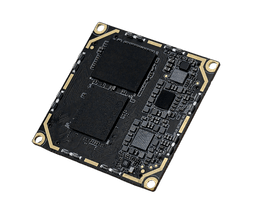
Rhino Pi A1 Mini uses the Rhino Core Q64 module. For a custom carrier board, explore its electrical specifications, interface definitions and system integration requirements.
Share your camera, display, peripheral, mechanical and system requirements so we can confirm the board, image and accessory configuration.